
STEM Activites
Magic Bean Sprout Experiment
🌱 How Does a Seed Grow?
Have you ever planted a tiny seed and watched the magic of science as it turn into a plant? How can something so small grow roots, a stem, and bright green leaves? Inside every seed is a tiny baby plant just waiting for water, air, and warmth to begin its amazing journey. Let’s discover the “magic” that helps a seed grow! ✨
🌧 What Is Germination?
Germination is when a seed begins to grow. To sprout, a bean seed needs:
Water
Oxygen (air)
Warm temperatures (60–80°F)
Once it absorbs water, the seed swells, cracks open, and starts to grow.
🌰 What’s Inside a Bean Seed?
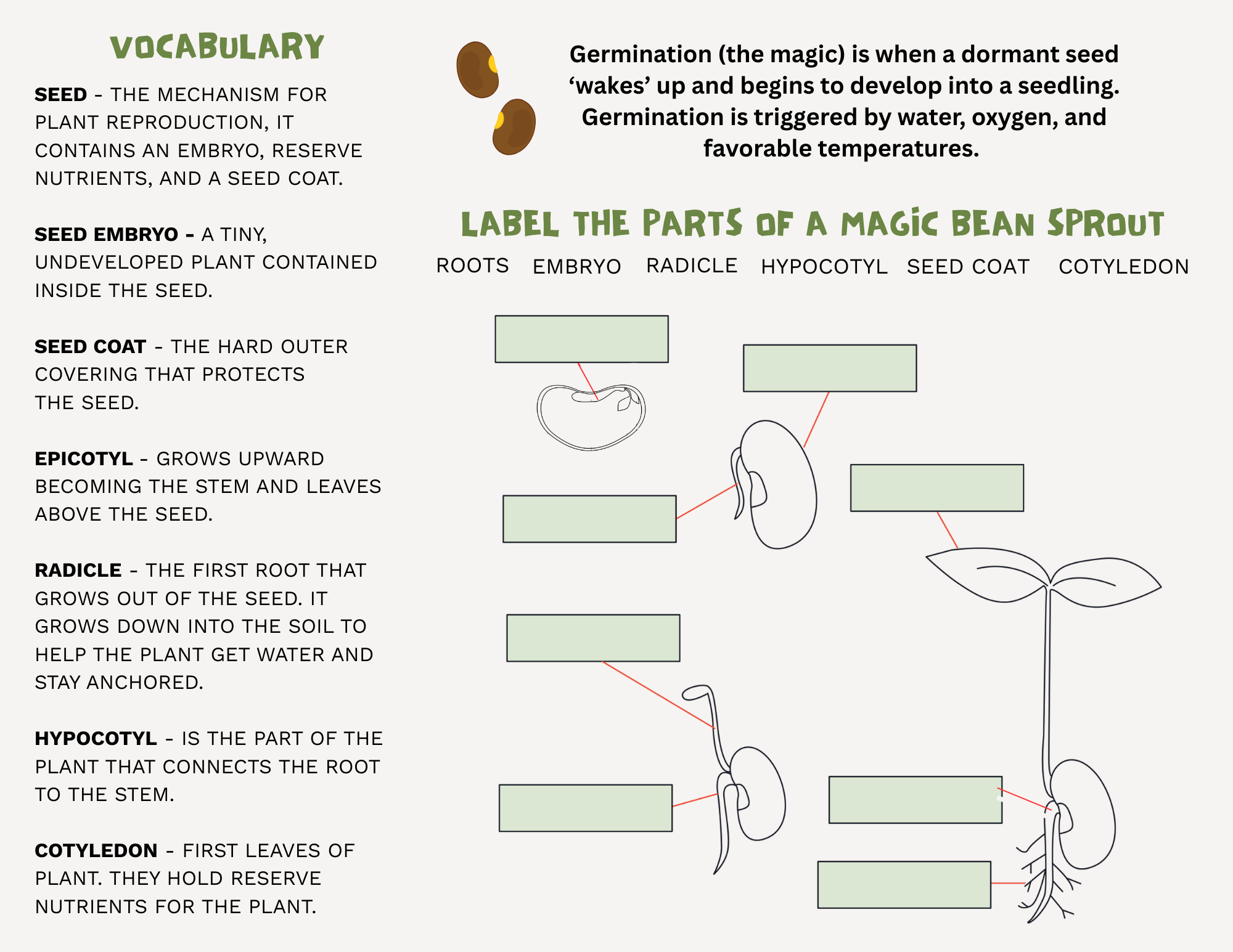
Seed Coat – Protects the seed
Radicle – Becomes the root (grows downward)
Hypocotyl – Connects root and stem
Epicotyl – Grows upward into stem and leaves
Cotyledon – Stores food for the young plant
🧪 Try It!
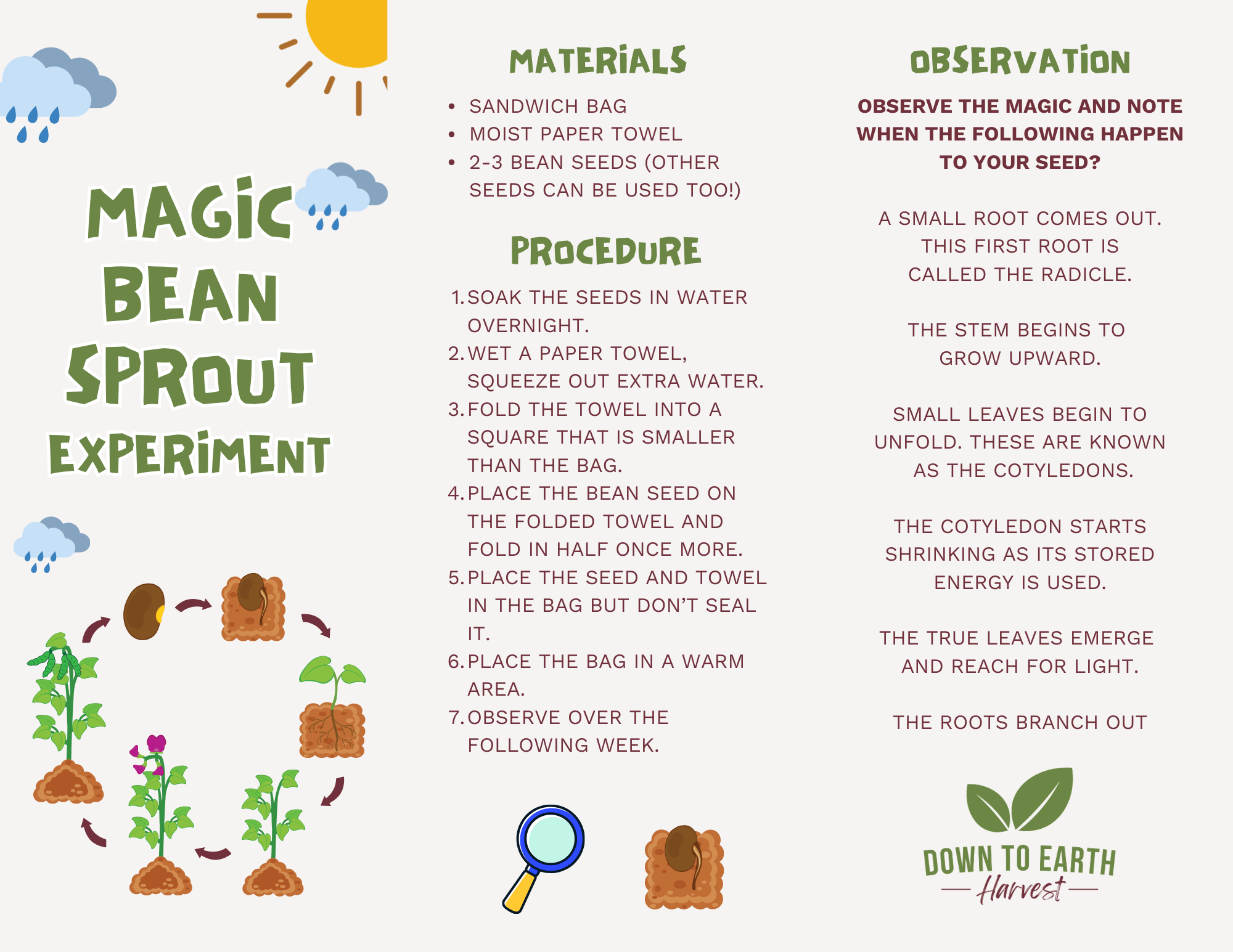
Place a wet paper towel in a plastic bag, add a bean seed between the towel and glass, and keep it warm and moist.
When does it swell? When does the root appear? When do leaves grow?
From one small seed, a whole plant begins! 🌿
Let’s break it down:
Soil Food Web
Discovering the Soil Food Web
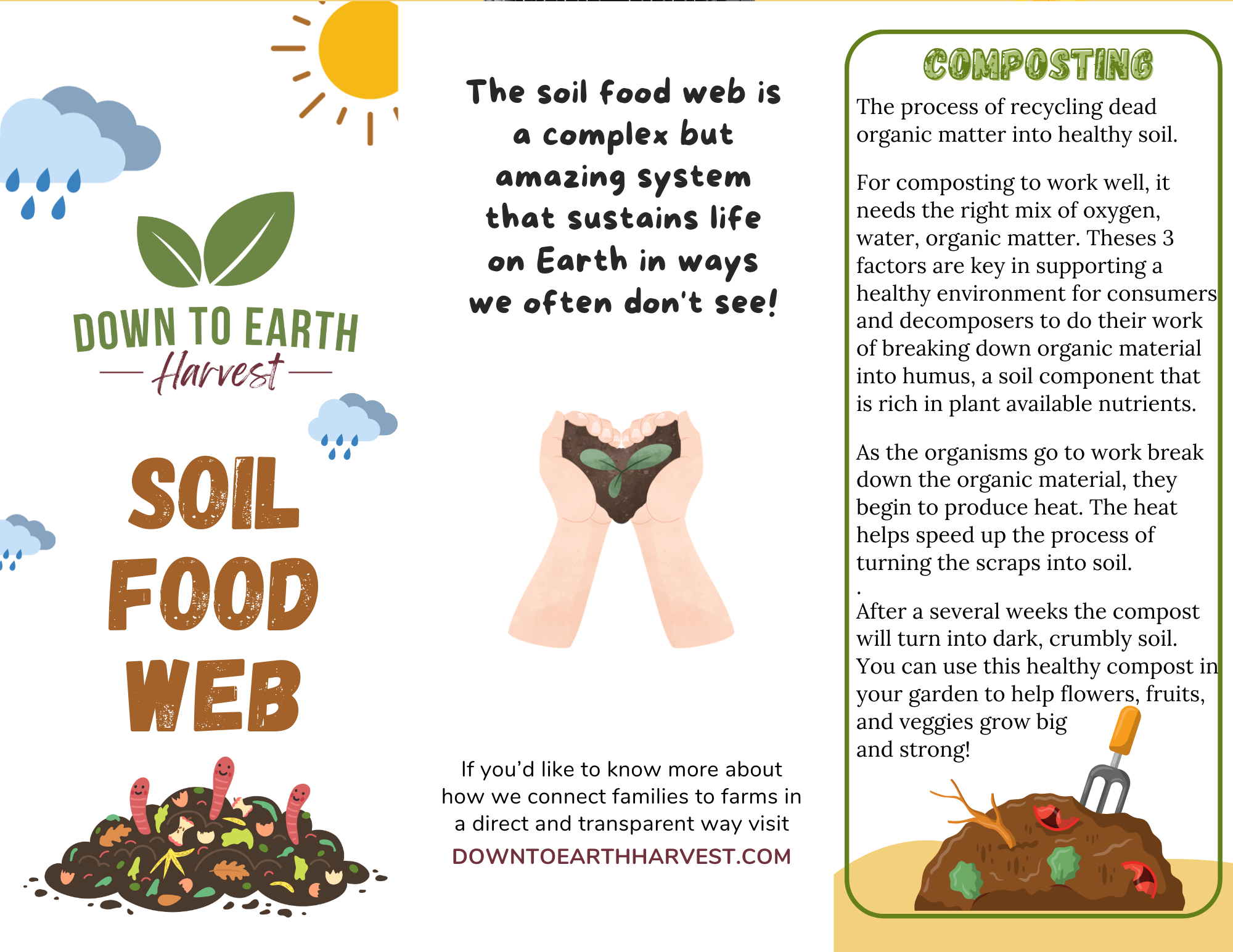
Did you know the soil beneath your feet is full of life? It may look like plain dirt, but it’s actually a busy underground world where living things work together to help plants grow. This amazing system is called the soil food web!
🕸 What Is the Soil Food Web?
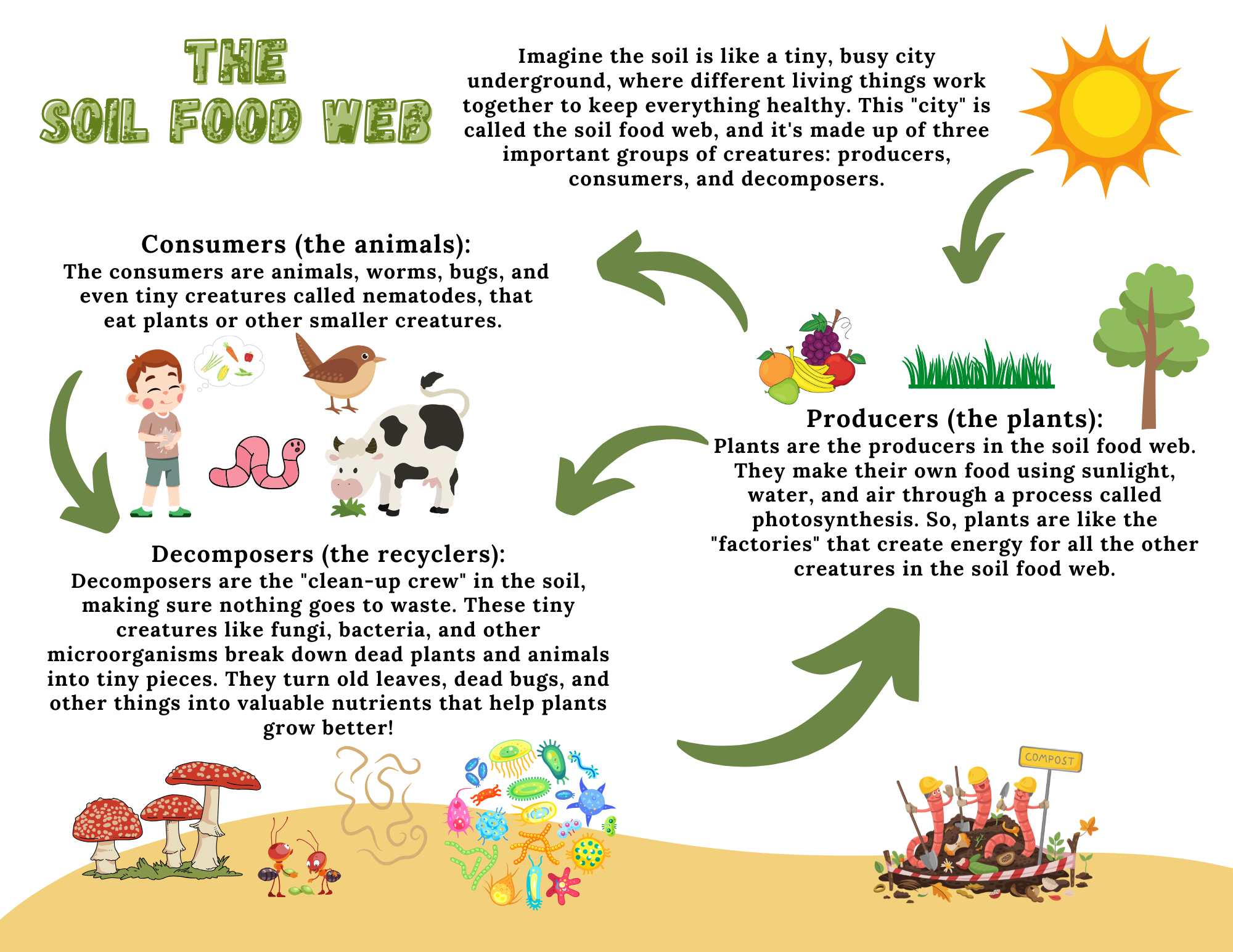
Think of the soil like a tiny city underground. In this city, different groups of living things each have important jobs. There are three main teams:
🌿 Producers (Plants)
🐛 Consumers (Animals & Bugs)
🍄 Decomposers (Recyclers)
Together, they keep the soil healthy and full of nutrients.
🌿 Producers: The Plant Factories
Plants are the producers in the soil food web. Using sunlight, water, and air, they make their own food through a process called photosynthesis.
Plants create the energy that supports all the other living things in the soil. Without plants, the soil food web couldn’t survive!
🐛 Consumers: The Eaters
Consumers include animals, worms, insects, and even tiny organisms called nematodes.
They eat plants or other small creatures. By doing this, they help move energy through the soil food web and keep populations balanced.
🍄 Decomposers: The Clean-Up Crew
Decomposers are tiny organisms like fungi and bacteria. They break down dead plants and animals into smaller pieces.
This process turns old leaves, scraps, and waste into rich nutrients that feed the soil. Nothing goes to waste!
♻️ Composting: Nature’s Recycling System
Composting is how we can help the soil food web at home. When food scraps and yard waste are mixed with air and water, decomposers get to work breaking everything down into dark, crumbly soil called humus.
After a few weeks, compost becomes nutrient-rich soil that helps gardens grow strong and healthy.
🌻 The next time you see soil, remember — it’s not just dirt. It’s a living, breathing world working hard beneath your feet!
Let’s Grow Together:
Pea Shoots
🌱 Let’s Grow Together: Pea Shoots
Pea shoots are young pea plants and can be eaten fresh just 2 weeks after sowing. How amazing is that? With a little care, water, and patience, you can grow your own tasty greens right at home.
Follow along and use your power of observation to be a Farmer-Scientist! Watch closely, ask questions, and notice changes each day. Growing plants is like doing a fun science experiment you can eat at the end!
And when your pea shoots are ready, be sure to share the pea shoots you grew with someone special. 💚
🌼 Step-by-Step: Growing Your Pea Shoots
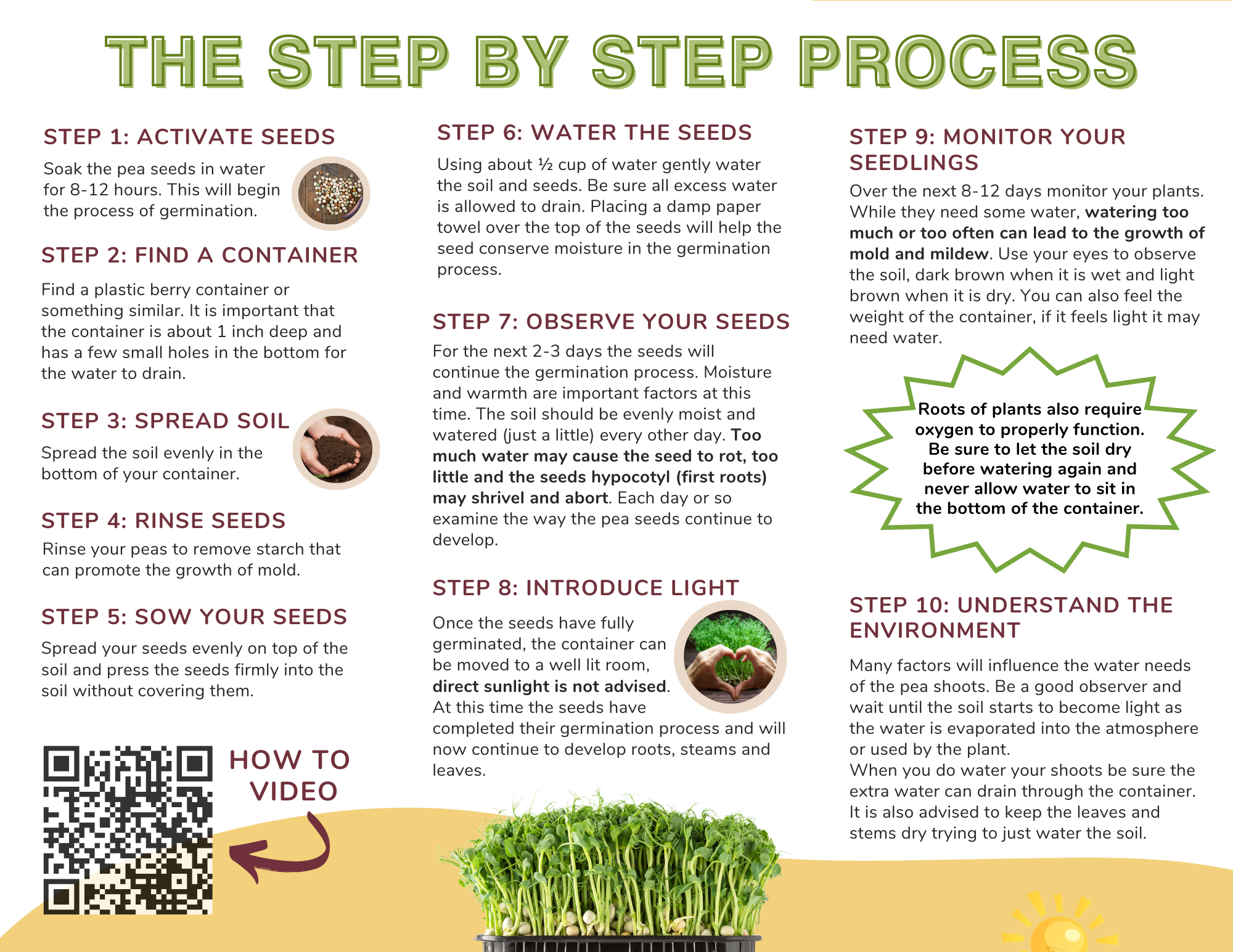
Step 1: Activate Your Seeds
Soak your pea seeds in water for 8–12 hours. This helps wake them up and begins the germination process.
Step 2: Find a Container
Choose a shallow plastic container (about 1 inch deep). Make sure it has a few small holes in the bottom so extra water can drain out.
Step 3: Spread the Soil
Spread soil evenly across the bottom of your container.
Step 4: Rinse the Seeds
Rinse your peas to remove starch that can encourage mold to grow.
Step 5: Sow Your Seeds
Spread your seeds evenly on top of the soil. Gently press them into the soil, but don’t cover them.
Step 6: Water the Seeds
Use about ½ cup of water to gently water the soil. Make sure extra water drains out. You can place a damp paper towel on top to help keep moisture in while the seeds begin to sprout.
Step 7: Observe Your Seeds
For the next 2–3 days, watch carefully! Keep the soil evenly moist (not too wet).
Too much water can cause seeds to rot.
Too little water can cause tiny roots to dry out.
Check your plants every day or two. What changes do you notice?
Step 8: Introduce Light
Once your seeds have sprouted, move them to a well-lit room.
☀️ Direct sunlight is not advised.
Your pea shoots will now grow roots, stems, and leaves.
Step 9: Monitor Your Seedlings
Over the next 8–12 days, continue observing.
Dark soil means it’s wet.
Light brown soil means it’s dry.
If the container feels light when you pick it up, it may need water.
Remember: Roots need oxygen! Let the soil dry a little before watering again, and never let water sit in the bottom of the container.
Step 10: Understand the Environment
Plants use water, warmth, and air to grow. When you water, let the extra water drain out. Try to keep the leaves and stems dry and water just the soil.
🧠 Farmer-Scientist Word Power
Sow: The process of preparing seeds for germination.
Germination: The process by which a seed grows into a seedling. Seeds need three important triggers to kick off germination: air, water, and warmth.
Seed: The small, round object from which the plant grows. It contains all the genetic material needed for the plant to develop.
Roots: These are the underground parts of the pea shoot. They anchor the plant in the soil and absorb water and nutrients to support growth.
Stem: The main support structure of the pea shoot. It grows upward from the seed and carries water and nutrients from the roots to the rest of the plant.
🥗 Harvest Time!
In about two weeks, your pea shoots will be ready to snip and enjoy! Add them to salads, sandwiches, or eat them fresh for a crunchy, sweet snack.
You planted.
You observed.
You grew food!
Now it’s time to celebrate your hard work — and don’t forget to share your homegrown pea shoots with someone special. 🌱💛